 Reviews

 Proudly American

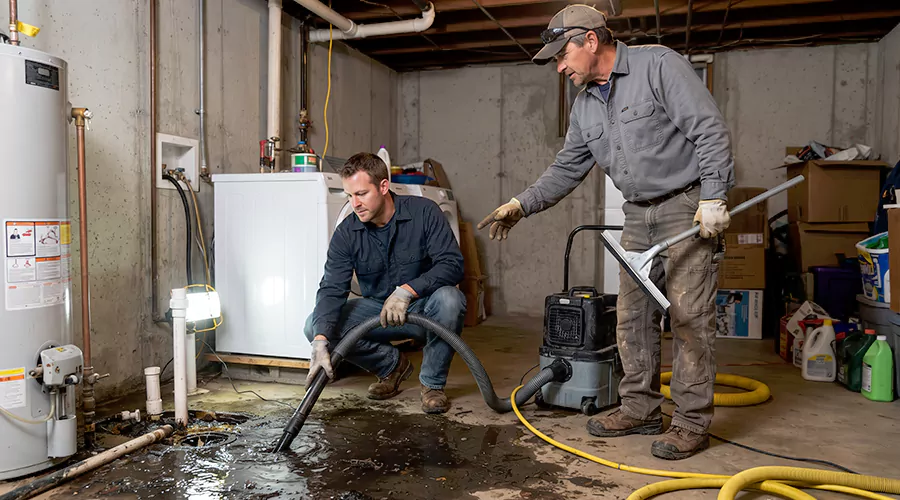
After a sewage backup, keep people away from the affected area and avoid electrical hazards. Stop the source when safe and begin water extraction and removal of contaminated materials as soon as conditions allow. Sewage can contain harmful microorganisms, so ordinary water cleanup methods are not enough. Wet materials should also be dried within 24 to 48 hours when possible.
A backup can spread beneath flooring or into drywall even when the visible wastewater covers only a small area. The first goal is safety. Cleanup should then move in a clear order.
What Should You Do Immediately After a Sewage Backup?
The first response should prevent contact with wastewater and stop more sewage from entering the property. Keep children and pets away. Do not enter standing water if electrical outlets or appliances may be energized.
Take these steps:
- Keep everyone out of the affected area.
- Stop using toilets or drains that may feed the backup.
- Shut off electricity only from a dry location when needed.
- Identify whether the backup is still active.
- Photograph visible damage when it is safe.
- Move unaffected belongings away from the contaminated area.
Do not walk through wastewater to reach the breaker panel. If the electrical supply cannot be reached safely, stay out of the affected area until the hazard is addressed.
What Should Be Removed During Sewage Backup Cleanup?
Sewage backup cleanup requires removing wastewater first and then evaluating anything that absorbed it. Hard surfaces can often be cleaned after the liquid is removed. Porous materials are harder to save because contamination can soak below the surface.
| Material | Typical Response After Sewage Contact |
|---|---|
| Tile or sealed concrete | Clean and disinfect |
| Metal or glass | Clean and disinfect |
| Carpet padding | Usually discard |
| Saturated drywall | Usually remove |
| Wet insulation | Usually remove |
| Upholstered furniture | Often difficult to save |
| Paper or cardboard | Usually discard |
Raw sewage cleanup should not rely on drying contaminated carpet or insulation and putting it back into use.
How Should Standing Sewage Water Be Handled?
Standing wastewater should be removed only after electrical conditions are safe and direct contact can be controlled. Suitable pumps or wet extraction equipment can handle the liquid. Splashing should be minimized because droplets can spread contamination.
During sewage water removal, wear rubber boots and waterproof gloves. Eye protection is also appropriate when splashing is possible.
Once the liquid is gone, do not assume the room is clean. Residue can remain on floors or lower wall surfaces.
How Should the Area Be Cleaned and Dried?
Sewage clean up should move from removal to cleaning before disinfection and drying. Dirt or organic residue can interfere with disinfectants, so hard surfaces need to be cleaned first. Use products according to their labels and never mix bleach with ammonia or other cleaners.
Use this sequence:
- Remove remaining solid debris.
- Wash salvageable hard surfaces with detergent.
- Apply an appropriate disinfectant as directed.
- Allow the required contact time.
- Remove excess moisture.
- Run dehumidification when electricity is safe.
- Continue drying until materials approach normal moisture levels.
Drying within 24 to 48 hours when possible also reduces the chance of mold developing after the backup.
What Warning Signs Mean the Damage Has Spread?
Hidden sewage water damage can remain after the floor looks clean. Wastewater may wick upward into drywall or spread beneath flooring. Persistent odor can also indicate contamination inside materials that were missed.
Watch for these signs:
- Drywall feels soft near the floor.
- Baseboards swell or separate.
- Flooring starts lifting.
- Carpet remains damp underneath.
- Cabinets swell at the bottom.
- A sewage odor returns after cleaning.
- Moisture readings remain high.
- Stains continue spreading.
- Mold begins appearing.
- Wastewater reached a wall cavity.
Sewage damage cleanup becomes larger when contamination moves behind finished surfaces.
What Can You Safely Check Yourself?
A simple boundary check can show whether moisture extends beyond the visible backup area. Do not cut into walls or open electrical fixtures. Instead, inspect accessible surfaces and compare moisture readings when you have a suitable meter.
- Mark the visible edge of the affected area.
- Test the material just outside that boundary.
- Compare it with a dry area of the same material.
- Repeat the check the next day.
- Watch for moisture moving farther outward.
This check cannot confirm that material inside a closed wall is safe.
When Should You Call a Professional?
Professional help is appropriate when wastewater covers a large area or enters porous building materials. Electrical exposure is another reason to avoid DIY cleanup. A backup involving several rooms may also require controlled removal so contaminated debris is not carried through the home.
Consider emergency sewage cleanup when:
- Sewage covers several rooms.
- Wastewater reaches electrical equipment.
- Drywall or insulation is saturated.
- The backup affects a finished basement.
- Contamination reaches a crawl space.
- The source cannot be stopped.
- Mold is already visible.
- Strong odor remains after cleaning.
Professional sewage cleanup may involve extraction equipment plus controlled material removal. Larger projects can continue into sewage cleanup and restoration once the structure is dry enough for repairs.
How Can You Prevent Another Sewage Backup?
Prevention depends on why the backup occurred. A blocked drain needs a different correction than a municipal sewer problem. Repeated slow drains or gurgling toilets should not be ignored because they can warn that wastewater is not flowing normally.
Use this maintenance routine:
- Investigate recurring slow drains promptly.
- Avoid flushing wipes or unsuitable materials.
- Maintain septic systems on schedule.
- Keep basement valuables above floor level.
- Consider a backwater valve where appropriate.
- Check lower-level drains after major storms.
Conclusion
After a sewage backup, protect people from exposure first and keep electricity away from standing wastewater. Remove contaminated water before cleaning hard surfaces, then discard porous materials that cannot be cleaned properly. Dry the affected structure within 24 to 48 hours when possible. If sewage reaches walls or electrical systems, professional assessment can define the safe cleanup scope.
Frequently Asked Questions
Can I stay in a home after a sewage backup?
People should stay out of contaminated rooms until wastewater and affected materials have been removed and the area has been cleaned.
Can carpet be saved after sewage contact?
Carpet and padding that absorb sewage are difficult to clean fully. Replacement is usually the safer response.
Should I use bleach on sewage?
A suitable disinfectant can be used after cleaning when the label allows it. Never mix bleach with ammonia or another cleaner.
How fast should sewage damage be cleaned?
Cleanup should begin as soon as electrical and structural conditions are safe. Wet materials should ideally be dried within 24 to 48 hours.
Does drywall need removal after a sewage backup?
Drywall that absorbs sewage is usually removed because contamination can move beneath the painted surface.
What should I do if the sewage keeps coming back?
Stop using connected plumbing fixtures and address the source before continuing cleanup. Repeated backups can indicate a blocked sewer line or drainage problem.